Blog Short #280: Stop Expecting Someone to Give You What They Don’t Have
Have you ever spent years waiting for someone to love or support you the way you needed? A parent who wouldn’t accept who you are, a partner who was emotionally closed off, or a friend who never called you first?
No matter what you tried, you couldn’t break through those closed doors.
Maybe the problem wasn’t you. Maybe you were asking that person to give you something they didn’t have the capacity to give.
I recently listened to Mel Robbins interview Oprah Winfrey, and as she talked about her history, she shared that she never felt loved by her mother, no matter what she did. She was fed, housed, and cared for, but love wasn’t expressed or felt.
She later came to terms with this during a life class with T. D. Jakes, who said:
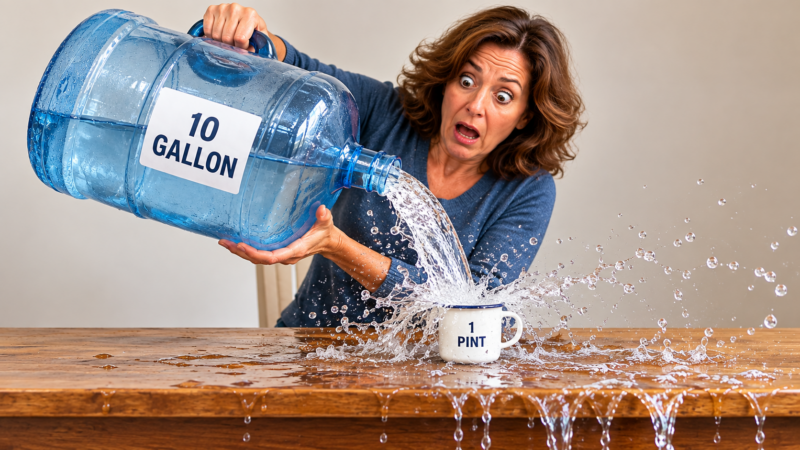
“A lot of you are 10-gallon people trying to get 10 gallons worth of love from pint-size people who cannot carry the 10 gallons. They can’t even carry the gallon. You’re looking for 10-gallon love, 10-gallon responses, 10-gallon reception, 10-gallon acceptance from people who have a pint-sized ability.”
Wow. That perfectly captures what happens when you expect something you need from someone who can’t give it. Even when your expectations are totally reasonable. That’s the rub.
So you feel pain and resentment, and depending on the relationship, you can hold on to it for years.
Today, I want to give you three things to consider to help you if you’ve had similar experiences or are experiencing them now.
Capacities
The first consideration is to understand what “capacities” are. They’re mental, emotional, or physical abilities that can vary in strength depending on how developed they are.
Although they aren’t actually quantifiable, T. D. Jakes’ metaphor of 10-gallon needs versus pint-sized capacities makes it easy to understand where someone may be stuck.
Another thing to consider is that we don’t develop capacities evenly. You might have developed considerable capacities for responsibility, service, or generosity, yet have very little capacity for emotional intimacy.
Generally, people share who they are. Often without awareness. The mom who can’t tell her children she loves them, but cooks for them and never misses a meal, is telling you that her capacity for emotional closeness is small or closed off, while her capacity to provide service is readily available.
The problem arises when you need something from someone and their capacity doesn’t match your expectation. You’re disappointed or hurt.
If the expectation is one that’s normalized by society, the effects are worse.
For example, we expect mothers and fathers to express love and affection easily with their children. So when it’s withheld or doesn’t happen, it feels worse and has longer-acting consequences.
It feels purposeful, as though the parent is withholding something they could give.
When you’re growing up, you can’t do much about the gap between your expectations and someone’s capacity to meet them. Sometimes you can fill that gap by having someone else meet those needs. In Oprah’s case, teachers and other adults in her life met some of those needs.
However, as an adult, you can put it in perspective by acknowledging and accepting it, so you no longer harbor resentment or anger over broken expectations.
One important note here: Someone may have the capacity for something yet withhold it purposefully. It’s an important distinction.
Different Stages of Development
We don’t all develop our capacities equally or at the same time.
Many factors shape what we’re able to give or receive, including our individual temperaments, histories, opportunities, and experiences.
When you consider that, it helps you see people more realistically without judging them. You’re looking at them through a wider lens.
Then, when you look back on unmet expectations, especially those from parents, family members, or anyone you’ve had a close relationship with, you can consider the experiences that have shaped who they are.
It takes it out of the realm of being so personal. It also releases you from being held or trapped by unmet expectations.
You don’t need to limit yourself to fit within someone else’s limitations.
Also, understanding why someone couldn’t meet your needs doesn’t erase the pain of not having those needs met.
It’s a process of grieving while gaining the freedom to become more of who you are despite the loss.
In Oprah’s case, she realized her mom’s cooking was her way of expressing love and that it was the best she could do at that time in her life, given who she was and where she came from.
You could argue that someone who’s responsible for others should work on their growth so they can meet the expectations placed on them.
But that’s a slippery slope.
A Slippery Slope
The slippery slope is getting caught up in continually expecting someone with a pint-sized capacity to meet your 10-gallon expectations.
You get stuck. Slide into chronic resentment, or keep trying to do something different to bring them around. Try to increase their capacity for them. Object or confront.
Or you try to appease, lower your expectations, or work harder to earn what you need. And you slide down with them.
Your emotional energy is consumed by what you can’t control, and you begin shrinking yourself to accommodate their limitations.
However, if you can see where someone is and accept it, you can move on without being held back.
Ultimately, each person has to grapple with their capacities, growth, and developmental stages. You can’t do it for them, especially when they’re unwilling.
You can be open to them, be there for them, and love them, but they still have to do their own psychological work.
Sometimes acceptance means changing the relationship or leaving it. And sometimes it means forgiving the person, or making peace with what happened. Either way, the goal is to free yourself so you can open doors to new opportunities and growth.
As Oprah said:
“If you are still wishing, hoping, and wanting what happened to you to be something different than it was, that will leave you stuck.”
Silver Linings
1. You stop taking everything personally.
Someone’s inability to offer affection, emotional support, or understanding isn’t necessarily a reflection of your worth. Their limitations don’t define you.
2. You make better relationship choices.
Rather than continually investing in relationships that can’t meet your needs, you become more discerning.
You choose better partners, friends, and even work environments where you can be yourself, grow, and flourish.
3. You can let go of resentment.
Understanding someone’s limitations can help you let go of expectations that keep reopening old wounds and keep you stuck.
It’s not that you excuse harmful behavior. But you accept reality and allow yourself to move ahead, taking what lessons you can with you, and freeing yourself emotionally to pursue what’s next.
4. You turn the lens toward yourself.
Instead of focusing exclusively on what you didn’t get, or what others lack, you begin examining your own capacities. What can you learn about yourself? Where is there room for growth or improvement?
Some capacities to consider are:
- Expressing love, affection, and empathy
- Listening openly to different ideas, beliefs, and perspectives
- Regulating your emotions, especially during conflict
- Setting goals and following through
- Developing self-awareness and pursuing personal or spiritual growth
I’m sure you can think of others. Make your own list.
One More Question
One more question you might ask is:
“Am I expecting capacities from others that I haven’t fully developed myself?”
One of the greatest benefits of understanding capacities is that it changes how you see both yourself and others. You recognize limitations with more compassion and less condemnation, without questioning your worth.
You see relationships more realistically and make better decisions in choosing intimate partners.
Most importantly, you don’t need to downsize your 10-gallon capacity to fit into a pint-sized container. You can choose otherwise, and that is enormously freeing.
That’s all for today.
Have a great two weeks!
All my best,
Barbara